
As seminary should be
The sacramental life of a seminary student

In my Systematic Theology, I have made a point to address a problem I see with seminary education today and with it, theology itself. I won’t share that here (I must retain some suspense in you readers). But I will say this, I have lamented how modern seminary education can be. I could mean any number of things by that lament—there is no shortage of ways seminaries have capitulated, even if unwittingly. But I am thinking of how severed an average student’s seminary experience is from daily liturgical life, including its sacramental participation in the reality of the incarnation. To be blunt, in most seminaries little of this is present. (How hard it is to foster the contemplative life in our digital age of distraction and hype.) Rarely will you find a seminary in which each day is measured by the student’s participation in a historic liturgy.
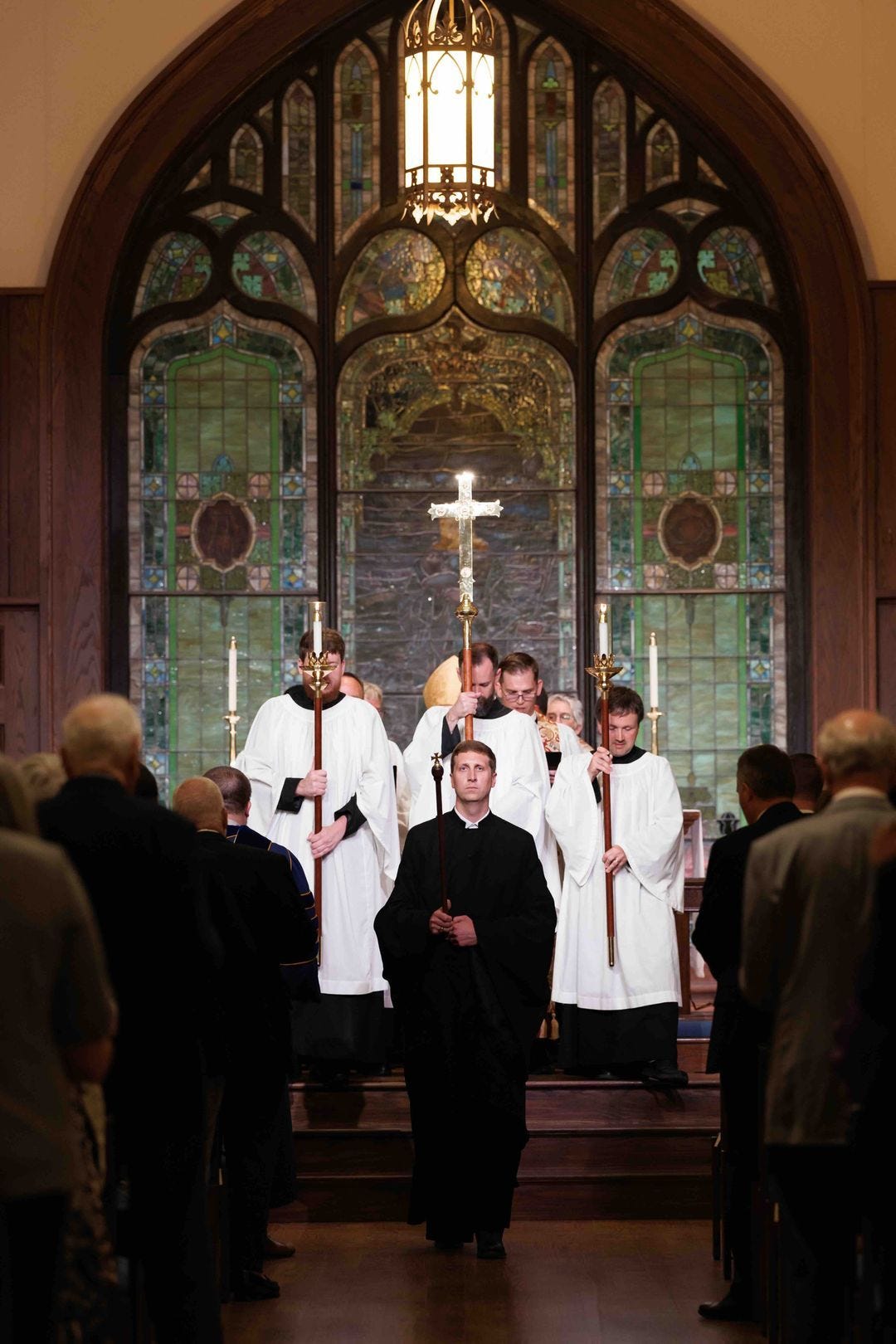
Truly, this participation in the liturgical life has been one of my most meaningful experiences at Trinity Anglican Seminary as well as Anselm House. At Trinity, we begin the day, faculty and students alike, with morning prayer in the chapel. For those unaware, by morning prayer I am referring to the whole school coming together to pray the liturgy of the Book of Common Prayer. Every day, therefore, begins with telling time as a Christian, meaning we begin with scripture that matches our place in the church calendar (Epiphany, Lent, etc.), which is followed by: confession of sin, absolution, the Invitatory (with its gloria patri), the Apostles’ Creed, our Father, the Venite, scriptural Lessons, collects (including John Chrysostom’s), and more.
Afterwords, students walk from morning prayer to the classroom where we open up primary sources. In my class on The English Reformation, for example, we have cracked open English divines from William Tyndale to Thomas Cranmer, from John Jewel to Richard Hooker. Hooker has been prophetic as we have studied his appeal to natural theology (even his reliance on Aquinas, among others) to refute the biblicism of his day. In this class, rather than me lecturing the whole time, we have engaged in Socratic dialogue over the great texts.
All classes break for lunch, at which time students and faculty walk over to the cafeteria to eat together. I have esteemed this time because although some academic conversations continue, many desire to hear what is happening in each other’s lives, churches, and dioceses. After lunch, students and faculty walk back to their classes. By late afternoon, it is time to conclude, but instead of everyone going their separate ways, we all walk back for evening prayer, concluding our time together by once more kneeling before our Lord.
Yet why stop at evening prayer? The pubs are open and you can usually spot a professor talking theology. I went to pay one evening and learned that many pub owners are used to seeing priests and professors walk through their doors. It is not uncommon to see a clerical collar with a stack of books in hand.


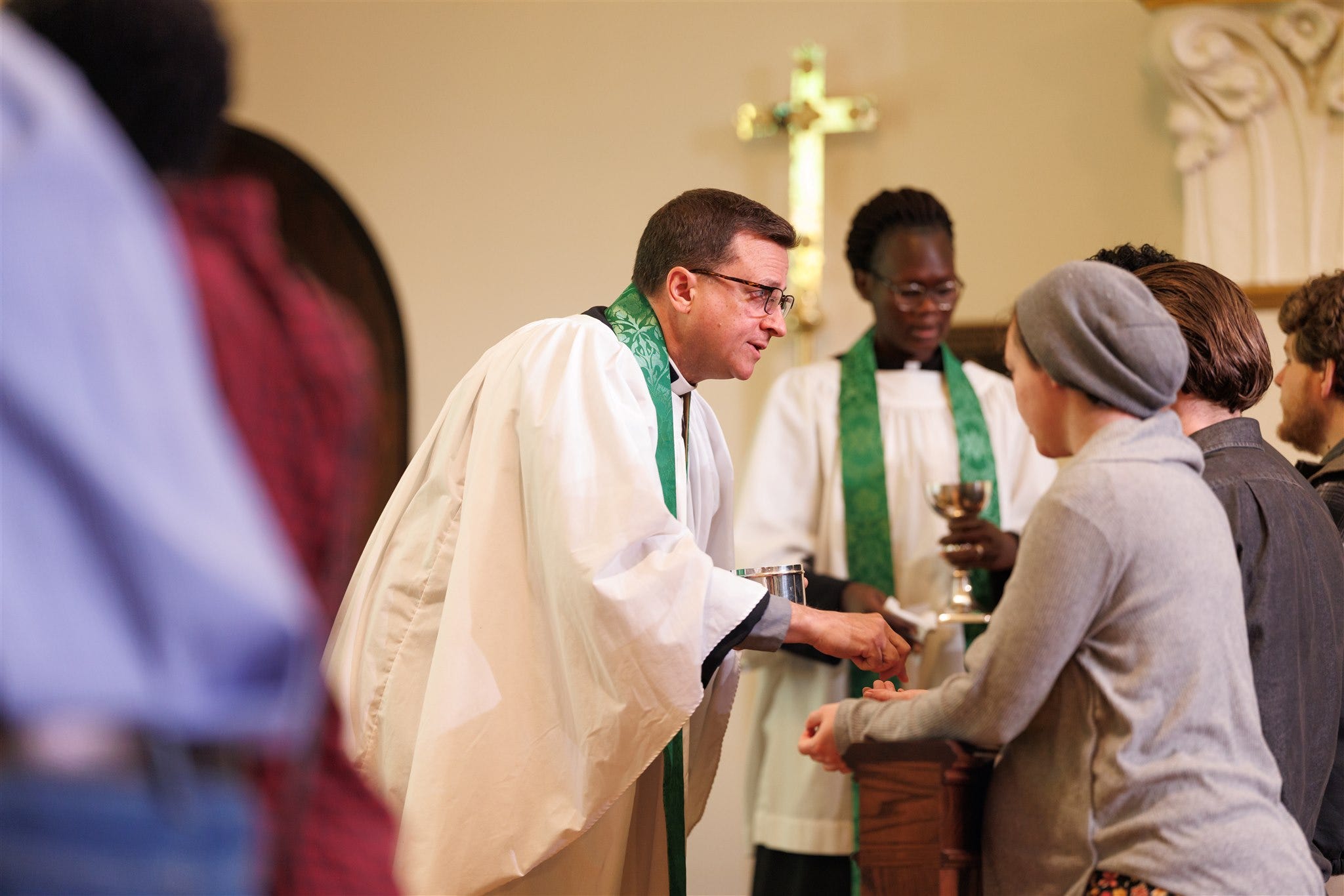
Wednesdays are slightly different. Morning prayer is accompanied by The Holy Eucharist in the beautiful Trophimus Center. Classes start later on Wednesdays to make room for the Eucharist liturgy, everything from The Kyrie and Trisagion to the Gloria in Excelsis, from a homily to the Nicene Creed (!), from the Sursum Corda to the Sanctus, from the Prayer of Humble Access to the Agnus Dei, and more. Together we hold out our hands on humble knees, marking the week by our total dependence on the grace of Jesus Christ. The line that echoes in my ear occurs when the priest prays,
“Sanctify us also, that we may worthily receive this holy Sacrament, and be made one body with him, that he may dwell in us and we in him.”
The way Anglicanism addresses the whole self—body and soul—could not be more relevant in a secular age quite Gnostic about the body. When class begins afterwards, teaching theology has a whole different meaning now that we have all participated in Christ, both in body and soul. Rather than “chapel” once or twice a week, the whole community is defined by a sacramental outlook, one that defines each student’s understanding of scripture, theology, and missions regardless the class.

I have carried this sacramental outlook into Anselm House where I am theologian-in-residence. Committed themselves to the liturgical life during their one-year residency, Anselm Fellows rise early for morning prayer and Holy Eucharist at St. Aidan’s Anglican Church. When we gather at Anselm House, we begin with evening prayer, followed by a meal for virtue formation, and then Socratic dialogue over classical texts. In February Fellows read Plato’s dialogues as well as Augustine’s Confessions. Now that it is March they are reading City of God—pray for them; some are reading the whole thing! Completing research in the Great Tradition, they are writing a paper that models Lectio Divina and soon enough the clergy will visit to participate and field questions about the liturgical life.
What does all this mean for my Systematic Theology writing and research? Scripture’s emphasis on participation and specifically the sacramental life of God’s people is not merely a chapter at the end (on the church) but a theology that infuses God’s work of redemption from start to finish. And of course, the mere mention of participation requires a classical doctrine of God (one that presupposes the right metaphysical principles) that can explain why in him, the one who is a se, we live and move and have our being.


Before I sign off, what else is on my radar?
The Credo conference is coming soon…end of April in fact! Please join us. I don’t know of any conference that helps the Christian understand why the Beatific Vision provides such hope to the Christian life.
Two new videos (and podcast episodes) are out: Dr. Cuddy, O.P., professor at Dominican House of Studies, and I discuss why theology is not an art but a science, as well as a follow up conversation on one of the giants of the last century: Garrigou-Lagrange.
Until next time, I leave you with this collect for Lent (one that begins with Augustine’s famous words): “Heavenly Father, you have made us for yourself, and our hearts are restless until they rest in you: Look with compassion upon the heartfelt desires of your servants, and purify our disordered affections, that we may behold your eternal glory in the face of Christ Jesus; who lives and reigns with you and the Holy Spirit, one God, for ever and ever. Amen.”